
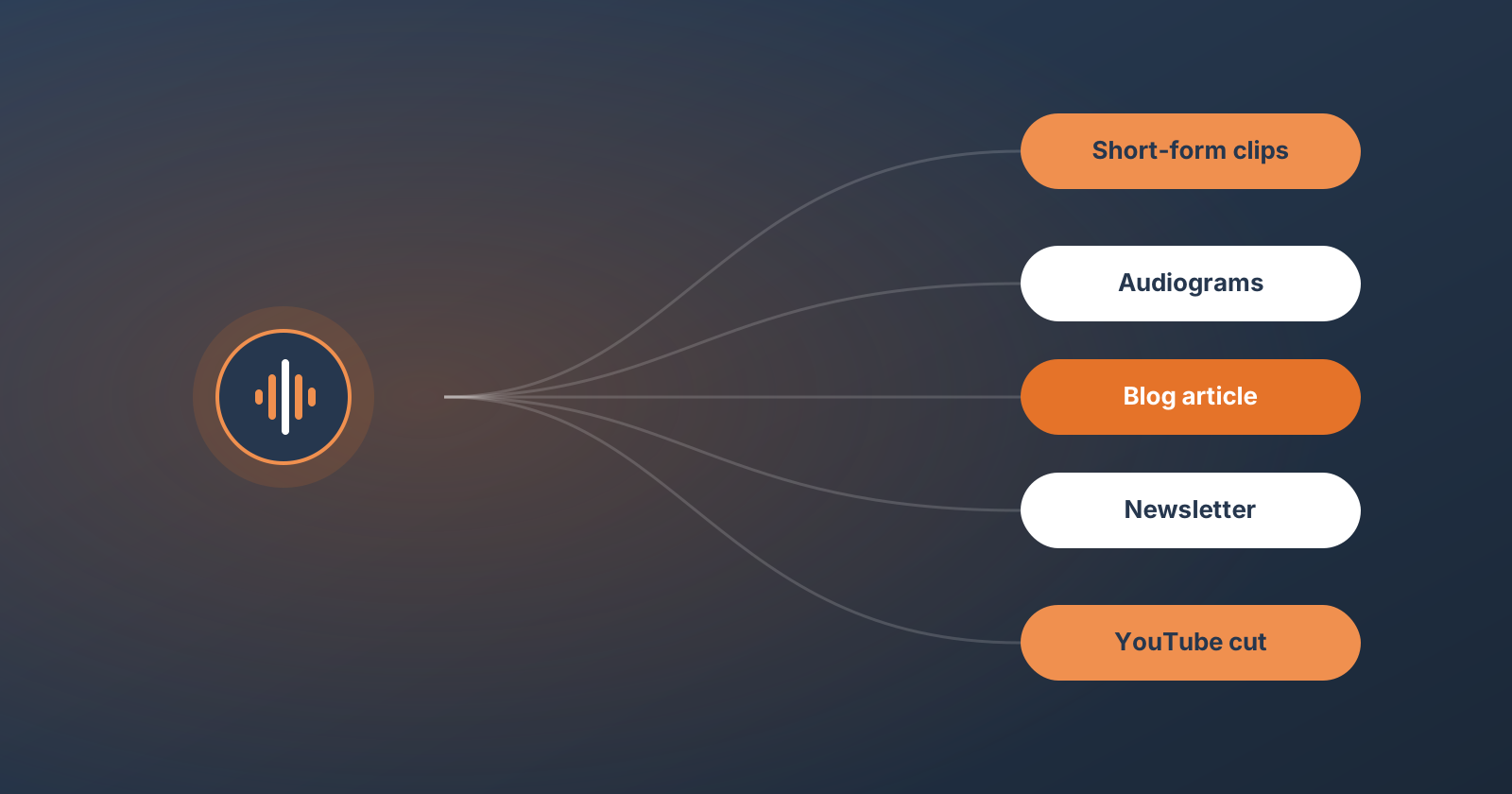
Most podcasters spend hours planning, recording, and editing an episode — then publish it once, share it once, and let it vanish into the feed. It's the content equivalent of cooking a feast and eating a single bite.
The shows that punch above their audience size treat every episode as a source, not a destination. One good recording holds enough raw material for weeks of clips, posts, and pages — each of which pulls new people back to the show. This is how to build that system without doubling your workload.
Key takeaways
- Publish-once-and-disappear wastes the most expensive thing you made — the recording.
- Record with repurposing in mind: capture video, and note quotable moments live.
- One 45-minute episode can realistically yield 20+ assets across formats.
- Short-form vertical clips are the top of the funnel; the full episode is the destination.
- The written layer — transcript, blog post, newsletter — is where the long-term search traffic lives.
The publish-once mistake
Podcast feeds are unforgiving. An episode gets its moment on release day, a modest bump from your own share, and then it sinks — discoverable only by someone who already follows you and happens to scroll back. All that effort, gated behind an app most of your potential audience will never open on the day you publish.
Repurposing flips the model. Instead of one asset living in one place for one day, you get dozens of assets living across the platforms where people already spend their attention — each one a fresh doorway back to the full show. The episode stops being a moment and becomes a month of marketing. And crucially, none of it requires making new content: it's all already in the recording you spent hours on.
Record with repurposing in mind
The best repurposing decisions are made before you hit record, not after. Two habits make everything downstream easier.
Capture video, even if you're “an audio show.” A simple webcam or phone recording of each speaker unlocks YouTube, vertical clips, and social video — the formats where discovery actually happens now. You don't need a studio; consistent framing and decent light are enough. Even audio-only shows can generate captioned “audiogram” video from a static frame.
Mark the moments as you go. Keep a note open during the recording and jot the timestamp whenever a guest says something sharp, surprising, or quotable. That thirty-second habit saves hours of re-listening later and ensures your best material never gets buried. A great episode usually has five or six genuinely clippable moments — your job is to know where they are before the edit starts.
The one-to-many map
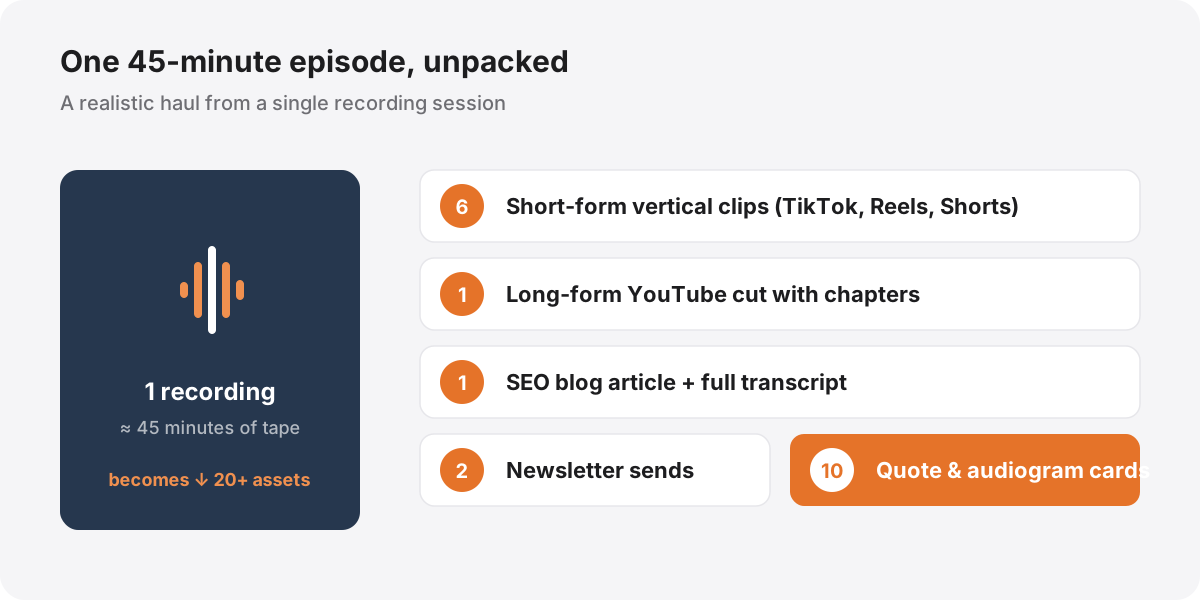
Here's what one 45-minute episode can realistically become — not in theory, but as a repeatable output:
- 6 short-form vertical clips for TikTok, Reels, and YouTube Shorts, each built around one of your marked moments.
- 1 long-form YouTube cut with chapters, giving the episode a home on the second-largest search engine in the world.
- 1 SEO blog article plus the full transcript — the piece that keeps earning search traffic for years.
- 2 newsletter sends — one announcing the episode, one pulling out a single idea in more depth.
- 10 quote cards and audiograms for feed posts, stories, and LinkedIn.
That's over twenty assets from a single session. You don't have to make all of them for every episode — but even doing half turns one recording into weeks of presence across every platform your audience uses.
Short-form clips that actually travel
Vertical clips are the top of your funnel — the way new people discover the show without ever opening a podcast app. But most clips fail, and they fail for predictable reasons.
Lead with the hook, not the setup. The first two seconds decide whether someone keeps watching. Start on the surprising claim or the sharp line, not “so, tell me about your background.”
Always caption. The large majority of social video is watched on mute. Burned-in captions aren't optional; they're the difference between a clip that works and one that's scrolled past in silence.
Make it self-contained. A clip should deliver a complete little idea, even to someone who's never heard of your show. The call to the full episode comes after you've earned their attention, not before.
One strong clip will outperform ten mediocre ones, so pour the effort into choosing the right moments — which is exactly why marking them during the recording pays off.
The written layer: where search traffic lives
Clips bring a spike; the written layer brings a compounding, long-term stream. This is the part most shows skip, and it's the most valuable.
Publish a full transcript and a written article for each episode on your own site. Audio is invisible to search engines, but a transcript is thousands of indexable words, and a well-structured article can rank for exactly the questions your episode answers — pulling in readers who then discover the show. (We go deep on this in our guide to podcast SEO.)
Then mine the same material for your newsletter. One episode easily supports two sends: an announcement, and a standalone piece that expands on a single idea from the conversation. Email is the one channel you own outright — no algorithm between you and your audience — which makes it the most reliable way to turn one-time listeners into regulars.
The written layer is slower to pay off than a viral clip, but it's the asset that's still working for you a year later.
Match the format to the platform
The same idea should be dressed differently for each place it lands. Cross-posting an identical clip everywhere is why so much repurposing falls flat — each platform rewards a different shape.
TikTok rewards personality, fast hooks, and a slightly rough, native feel; over-polished corporate clips get scrolled. Instagram Reels favours the same vertical format but a cleaner aesthetic and strong on-screen captions. YouTube is a search engine as much as a social feed, so titles and thumbnails do the heavy lifting, and both Shorts and the full long-form cut have a place. LinkedIn rewards a specific, useful insight framed as a lesson, often as a text post with the clip or an audiogram underneath. X and threads suit a punchy quote plus a link back.
You don't need a different idea for each — you need the same idea re-cut and re-captioned to fit. A thirty-second moment becomes a punchy TikTok, a captioned Reel, a searchable Short, and a LinkedIn lesson, each tuned to how people actually consume that platform. That tuning is the difference between content that travels and content that technically exists.
Repurpose the back catalogue, not just new episodes
Repurposing isn't only for this week's episode. Your archive is full of evergreen material that new followers have never seen — and that most shows leave to gather dust.
If an idea was good a year ago, it's almost certainly still good now, and the vast majority of your current audience wasn't around to hear it. Periodically mine older episodes for their best moments and run them through the same system: fresh clips, an updated blog post, a “from the archive” newsletter. Evergreen how-to and framework episodes are especially worth resurfacing, because the questions they answer never go out of date.
This is the closest thing podcasting has to free content. The expensive part — the recording — is already done. Turning a strong two-year-old conversation into a new week of clips and posts costs a fraction of making something from scratch, and it quietly doubles the working life of everything you've ever published.
Build a repeatable system
Repurposing only works if it's a system, not a heroic effort you manage once and abandon. The trick is to make it a fixed, lightweight routine attached to every episode.
Build a simple checklist that turns each recording into the same set of outputs: pull the marked clips, cut the YouTube version, publish the transcript and article, schedule the two newsletter sends, and queue the quote cards. Batch similar tasks — edit all the clips in one sitting, write all the social copy in another — so you're not context-switching. Schedule the assets to roll out over the two weeks after release, so the episode keeps resurfacing instead of burning out on day one.
Done consistently, this is how a modest show starts to feel everywhere at once. It's also, frankly, a lot of production work — and turning one recording into a full slate of assets is a core part of what we do for the shows we produce, so the host can stay focused on the next conversation.
References & further reading

Author
Shauna Martin
Head of Content Marketing
Hi, I'm Shauna — I lead content at Selected Frequencies. I spend my days pulling apart what makes a podcast worth listening to and writing it down, so you don't have to learn it all the hard way.