

Every new podcaster has the same fantasy: land one enormous name, ride the audience they bring, and shortcut the slow years. It almost never works. Big names bring their existing fans to their content, not reliably to a show they appeared on once, and the effort of landing them is wildly out of proportion to the return.
The shows that grow do something less glamorous and far more effective: they book interesting guests consistently, treat outreach as a craft, and make saying yes effortless. This is the system we use to help the shows we produce fill a calendar with guests who genuinely move the needle — no big name or budget required.
Key takeaways
- “Interesting and reachable” beats “famous and unreachable” almost every time.
- Start from a guest thesis — the specific expertise your audience needs — not a wish list of celebrities.
- Your existing guests, listeners, and their networks are the richest booking source you have.
- A great outreach email is personal, gives a reason only they can fill, and contains exactly one clear ask.
- Reduce friction to almost zero: propose times, keep the tech simple, and prep so their time is respected.
Forget the big name
The instinct to chase a marquee guest comes from a misunderstanding of how podcast audiences grow. A famous guest's followers are loyal to them, and a one-off appearance on your show rarely converts more than a trickle of them into your listeners. Meanwhile, the biggest names have gatekeepers, publicists, and calendars booked months out — you can spend the effort of ten bookings chasing one that may never land.
The better filter is interesting and reachable. A researcher with a genuinely new idea, a founder in the middle of a hard pivot, an operator who's done the specific thing your audience is trying to do — these guests give better interviews, say yes far more often, and share the episode enthusiastically because it's a meaningful moment for them, not their hundredth podcast this year. Depth of insight travels further than name recognition.
Build a guest thesis, not a wish list
Before you name a single person, define what your audience needs to hear. This is your guest thesis: the two or three categories of expertise that serve your show's promise. A podcast for early-stage founders might need operators one step ahead, investors who'll be honest about what they actually fund, and specialists (legal, hiring, finance) who de-risk a common mistake.
Working from a thesis instead of a wish list changes everything. It turns booking from “who's famous enough?” into “who can answer this question better than anyone?” — a question that has dozens of qualified, reachable answers. It also keeps your show coherent: every guest advances the same underlying promise, so your back catalogue becomes a body of work rather than a random collection of chats.
Where to actually find them
Great guests are closer than you think. In rough order of how well they convert:
Your existing guests. End every recording by asking, “Who's the most interesting person you know on this topic?” A warm introduction from a past guest is the highest-converting lead you'll ever get.
Your listeners. The people already choosing to listen include operators, experts, and well-connected fans. Ask them directly — a simple call-out in the episode or newsletter surfaces guests who already understand and like the show.
Adjacent podcasts and newsletters. Someone who gave a great interview elsewhere has proven they can do it and enjoys the format. Authors with a book to promote, researchers with a new paper, and founders who just announced a round are all in an active window where a podcast helps them.
LinkedIn and communities, used specifically. Not spraying invitations, but finding the person whose recent post or work is exactly on-thesis and reaching out about that.
The outreach email that gets a yes
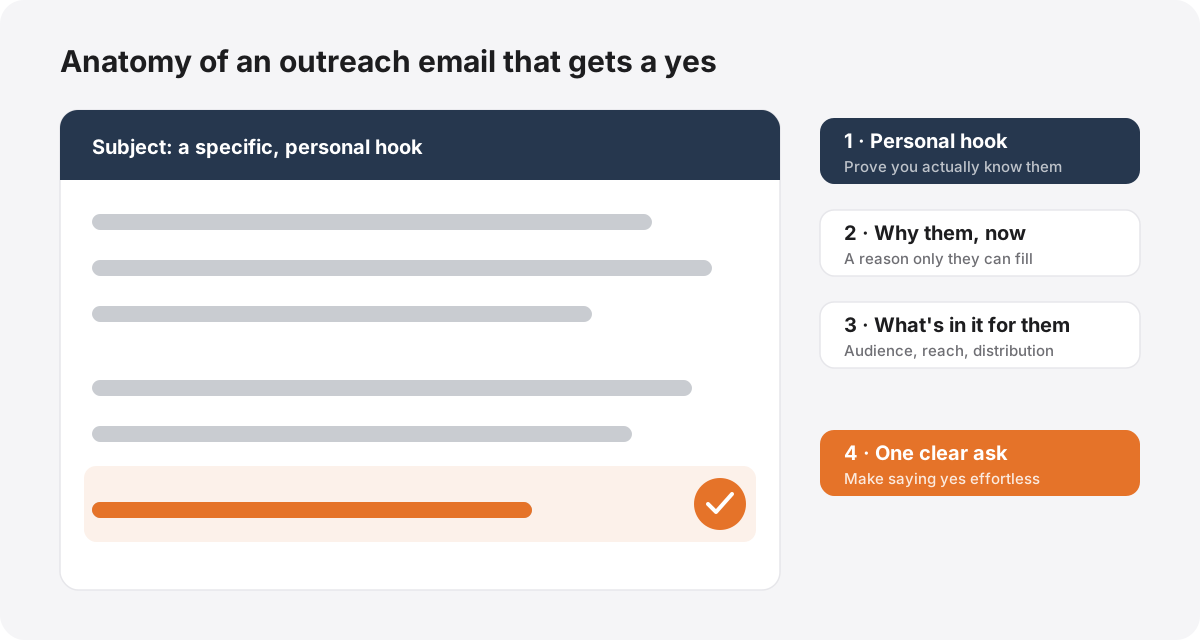
Most outreach fails because it's obviously a template. The fix is four things, in order:
1. A personal hook. Open with proof you actually know their work — a specific line from their talk, a decision they made, a post that landed. One genuine sentence beats three paragraphs of flattery.
2. Why them, now. Give a reason only they can fill. “I want a guest on hiring” is weak; “You scaled from 5 to 50 people in a year and have said hiring was your biggest mistake — I'd love to unpack exactly what you'd do differently” is irresistible, because no one else can answer it.
3. What's in it for them. Be honest and concrete about your audience and reach — who listens, roughly how many, and how you'll help them get the episode in front of their people with clips and assets.
4. One clear ask. End with a single, specific request: a 45-minute recorded conversation, remote, at one of two proposed times. Every extra question or option you add is another reason to defer the reply.
Keep the whole thing under 150 words. Busy people skim; a wall of text reads as work.
Make the yes effortless
A yes is fragile. Between agreeing and recording, a dozen small frictions can quietly kill a booking — a confusing scheduling link, an unfamiliar tool, uncertainty about what they'll be asked. Your job is to remove every one.
Propose specific times rather than asking “when are you free?” Use a scheduling tool that handles time zones so a London host and a New York guest don't play email tag. Keep the tech dead simple — a single link to a browser-based recording studio, with a one-line note on what to expect. Send a short brief a few days ahead with the three or four themes you'll cover, so they arrive relaxed and ready rather than guessing.
Every bit of friction you absorb on their behalf raises your booking rate and the quality of the conversation. Guests remember being looked after, and they tell other potential guests.
Handling no-shows, nerves, and declines
Booking guests means dealing with the messy human parts, and a little preparation keeps them from derailing your schedule.
No-shows and reschedules are inevitable at any volume. Blunt the impact by sending a friendly reminder the day before with the link and the time zone spelled out, and by keeping a small “ready bench” of guests you can slot in if a recording falls through. Never let one cancellation cost you a publishing week.
Nervous guests give worse interviews, and many first-timers are quietly anxious. Defuse it before you record: spend the first few minutes off the record chatting, remind them it's edited so nothing has to be perfect, and share the two or three themes so they feel oriented rather than tested. A relaxed guest is a better guest, and that comfort is entirely within your control.
Declines and silence are not rejection — they're usually just timing. Someone who ignores a cold email may say yes enthusiastically six months later when the ask is warmer or the audience is bigger. Keep a simple list of everyone who didn't bite, note why if you know, and revisit it periodically. The word “no” in outreach almost always means “not now,” and treating it that way turns a dead end into a future booking.
Turn one guest into three
A booked guest is not just an episode — it's a node in a growing network. Handled well, each one leads to the next.
Always ask for a referral at the end of the recording, while the goodwill is highest. Make the guest genuinely proud of the episode by sending them ready-to-post clips and a written summary — people share things that make them look good, and that share introduces your show to a whole new audience of potential guests and listeners. Keep a simple list of everyone who said “not right now,” and circle back when you have a relevant episode or a bigger audience to offer.
Do this consistently and booking stops being a cold, uphill grind. It becomes a warm network that compounds — which is exactly the position a good show wants to be in. Producing the clips, briefs, and summaries that keep that flywheel turning is a big part of what we do for the shows we work on.
References & further reading

Author
Shauna Martin
Head of Content Marketing
Hi, I'm Shauna — I lead content at Selected Frequencies. I spend my days pulling apart what makes a podcast worth listening to and writing it down, so you don't have to learn it all the hard way.