

Open any podcast host's dashboard and the first number it shows you is downloads. It's big, it goes up, and it feels like the score. It's also the single most misunderstood figure in podcasting. A download tells you a file started transferring — not that anyone listened, finished, or cared. If you're making decisions about your show based on that number alone, you're steering by the least reliable instrument on the dashboard.
This guide breaks down what podcast analytics actually measure, which metrics predict real growth, and the handful of numbers worth checking every month. It's written for people who host or commission a show and want to know whether it's working — not for data analysts.
Key takeaways
- A “download” is a technical event, not a listen — the IAB defines a strict baseline, but platforms still vary.
- Consumption (how much of each episode people actually hear) predicts growth far better than raw downloads.
- Apple, Spotify, and your host each hold a different slice of the truth — you need all three.
- Track five numbers monthly: consumption rate, 7-day downloads, unique listeners, follower growth, and top-episode retention.
- Ignore all-time totals, chart positions, and single-day spikes — they feel good and tell you nothing actionable.
What a “download” actually means
A download is logged when a podcast app or browser requests your episode's audio file from the host. That's it. It doesn't confirm a human pressed play, listened past the intro, or was even awake. Many apps pre-download episodes automatically for people who follow the show, which means a download can happen while a listener is asleep and never opens the file.
To stop every host inflating the same number differently, the IAB Tech Lab publishes the Podcast Measurement Technical Guidelines — the industry standard that defines what may be counted. It requires, among other things, that you filter out bots, only count requests that download at least a minute of audio, and de-duplicate repeated requests from the same device within a 24-hour window. Reputable hosts (Buzzsprout, Transistor, Captivate, Acast and others) certify against it, which is why an “IAB-certified download” from one host is roughly comparable to another.
The practical takeaway: downloads are a reach proxy, useful for spotting trends over time and for talking to sponsors — but they are the beginning of the story, not the end of it. If it's the sponsor conversation you're heading towards, the sponsorship calculator turns a downloads-per-episode figure into what that's actually worth at 2026 CPM rates.
Consumption: the metric that predicts growth
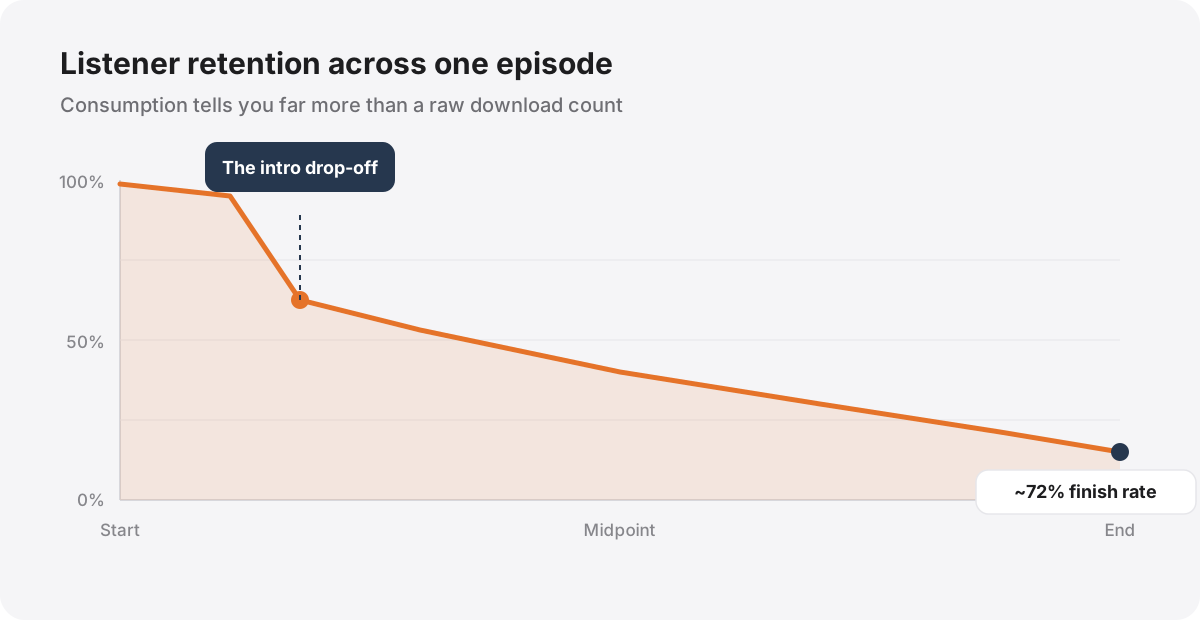
If you only add one number to your routine, make it consumption — the percentage of each episode people actually listen to. Both Apple and Spotify report it, and it's the closest thing podcasting has to a quality signal.
Why does it matter more than downloads? Because the platforms themselves use it. Spotify and Apple both weigh engagement when deciding what to recommend and rank; a show people finish gets pushed to more people, while a show people abandon after two minutes quietly stops being suggested. High consumption compounds. Low consumption caps your growth no matter how much you spend promoting the show.
Read the shape of the retention curve, not just the headline percentage. A steep cliff in the first minute usually means your cold open is too slow or your intro music runs too long. A gentle, steady decline is normal and healthy. A mid-episode drop often marks an ad break that's too long or a tangent that lost people. These are fixable production problems — but only if you look.
As a rough benchmark, an interview or narrative show holding 70% or more average consumption is doing genuinely well. Below 50%, something structural is worth investigating.
Unique listeners vs. downloads
Downloads count file requests; unique listeners (or “reach”) count people. The gap between them tells you how your audience behaves. If your downloads are five times your unique listeners, you have a small, loyal audience listening to lots of your back catalogue — which is great for depth but tells you growth is flat. If downloads and uniques are close together, you're reaching lots of new people who each try one episode — great for reach, but you have a retention problem to solve.
Spotify for Creators reports listeners and followers directly. Apple reports “unique devices,” which is a reasonable proxy. Your host's raw download figure is neither — so never compare a host download number to a Spotify listener number and imagine they measure the same thing. They don't.
Where each platform hides the truth
No single dashboard shows the full picture, because each platform only sees its own users. You need to triangulate across three sources:
Your host (Buzzsprout, Transistor, Acast, etc.) gives you total IAB-certified downloads across every app, plus geography and the app breakdown. This is your best number for trend lines and sponsor conversations.
Apple Podcasts Connect covers Apple listeners only, but adds the metrics Apple uniquely knows: followers, plays, and consumption per episode. It's the richest engagement data most shows have access to.
Spotify for Creators covers Spotify listeners only, and adds follower growth, streams, and listener demographics (age, gender, and top cities) that no other source provides.
Check all three. A drop in host downloads paired with steady Spotify streams usually just means an Apple-side reporting quirk, not a real audience decline — and you'd panic unnecessarily if you only looked at one.
The five numbers worth a monthly check
You don't need a spreadsheet with forty columns. For most shows, five numbers reviewed once a month tell you everything you need to act on:
- Average consumption rate — is your content holding attention? Trend it episode over episode.
- Downloads in the first 7 days — the fairest way to compare new episodes, since older ones have had longer to accumulate. This is also the window most sponsors price against.
- Unique listeners / reach — are you actually growing the audience, or just serving the same people more?
- Follower / subscriber growth — followers get your new episodes pushed to them automatically, so this is your compounding base.
- Retention on your best episode — study what your highest-consumption episode did differently, then do more of it.
That's the whole dashboard. Everything else is context.
How to read a trend without false panic
Even the right metrics will mislead you if you read them one data point at a time. Podcast numbers are naturally noisy: a big guest, a holiday weekend, a platform reporting delay, or a single popular episode can all swing a week's figures without telling you anything about the underlying health of the show.
The fix is to zoom out. Look at a rolling average — say, a trailing four- or twelve-week line — rather than reacting to any single episode. Compare like with like by always using the same window, such as downloads in the first seven days, so a fresh episode isn't unfairly measured against one that's had a month to accumulate. And expect seasonality: most shows dip in summer and around major holidays, then recover, and mistaking that annual rhythm for a decline leads to panicked changes that do more harm than good.
Above all, benchmark against yourself, not against other shows. Public download numbers are wildly inconsistent and often quietly inflated, so comparing your figures to a competitor's claim is meaningless. The only comparison that matters is you last quarter versus you now. Is consumption trending up? Is your seven-day reach growing? Are followers compounding? Those internal trends, read patiently over time, are the real scoreboard.
The vanity metrics to stop worrying about
Finally, permission to ignore some things. All-time download totals feel great and mean nothing — a five-year-old show will always out-total a brilliant new one. Chart positions are volatile, gameable, and largely driven by velocity in a narrow window, not sustained quality. A single-day spike from a big guest share is nice, but if those listeners don't come back it's a fireworks display, not growth.
The test for any metric is simple: would a change in this number change what I do next? Consumption fails that test only if you ignore it; an all-time total fails it always. Spend your attention on the numbers that point at a decision — the edit to tighten, the topic to repeat, the format to drop — and let the rest be trivia.
If pulling this together each month sounds like exactly the kind of work you'd rather not do, that's the part we handle for the shows we produce — turning the dashboards into a plain-English read on what's working and what to change.
References & further reading

Author
Shauna Martin
Head of Content Marketing
Hi, I'm Shauna — I lead content at Selected Frequencies. I spend my days pulling apart what makes a podcast worth listening to and writing it down, so you don't have to learn it all the hard way.