
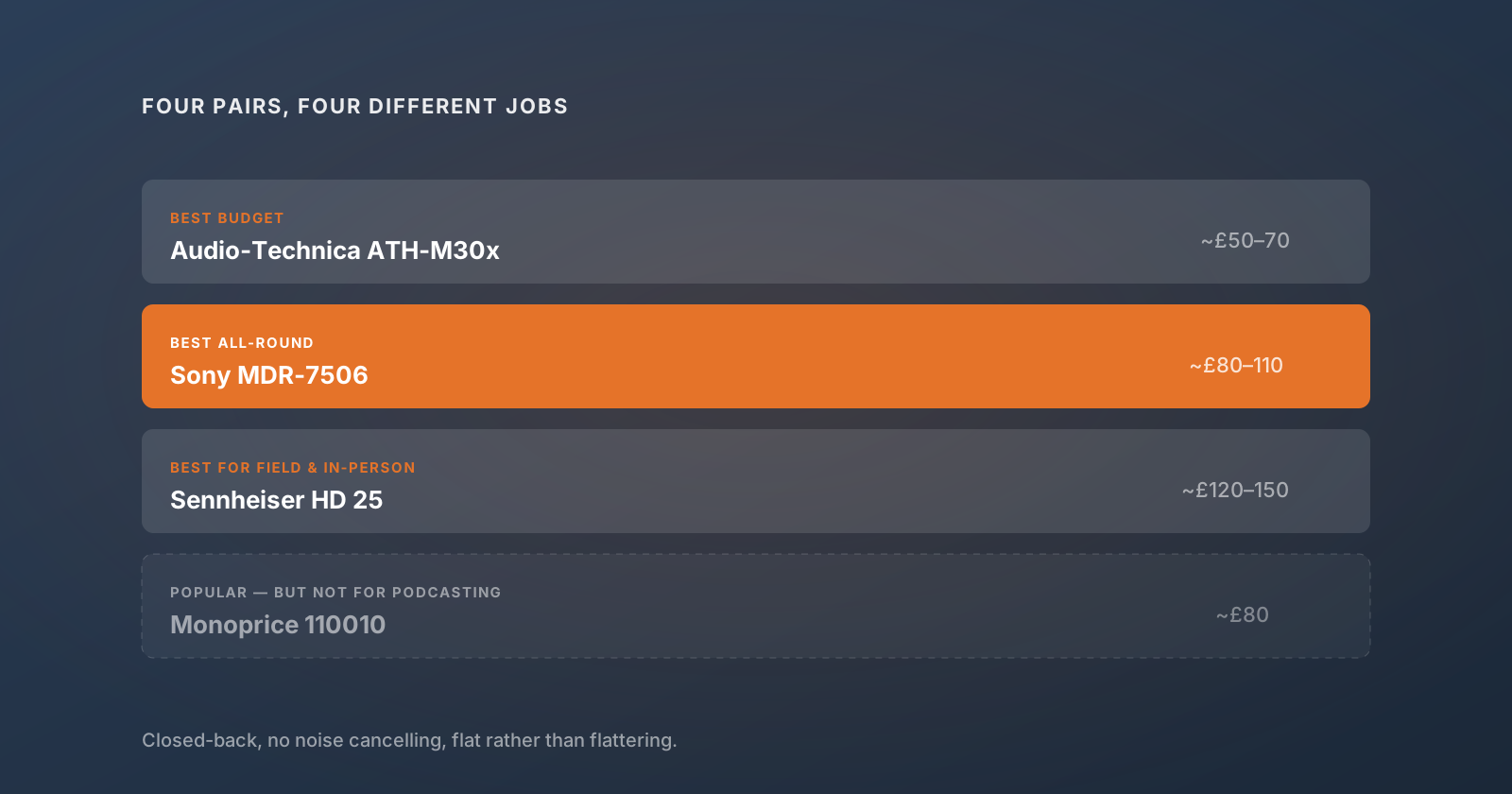
The short version: buy the Sony MDR-7506 if you're serious, the Audio-Technica ATH-M30x if you're starting out, and the Sennheiser HD 25 if you record in the field or interview people in person. All three are closed-back, none has noise cancelling, and any of them will serve a podcast properly.
The fourth pair on this page, the Monoprice 110010, is here because it's popular, it's genuinely decent, and it's the wrong tool for this job. Explaining why is more useful than another list of things to buy.
I produce podcasts for a living and spend most of my working week inside a pair of headphones. Everything here is organised around one idea: headphones are the instrument you make every other decision with, so the job is accuracy rather than enjoyment.
Last updated 8 August 2026. Prices move constantly and vary by retailer — every figure here is an approximate range at the time of writing, not a quote.
Key takeaways
- Closed-back is non-negotiable for recording: open-back leaks into the microphone and the bleed can't be removed.
- Flat and revealing beats flattering. Headphones that hide plosives and sibilance cost you later.
- Never monitor on active noise cancelling — it processes the signal, so you aren't hearing what was recorded.
- Comfort matters more than detail once you're editing for hours a week.
- Replaceable parts are why thirty-year-old broadcast headphones are still in daily service.
Quick picks
Best all-round — Sony MDR-7506, around £80–£110. The broadcast standard since 1991 and the sensible buy-once choice. Flat, closed-back, foldable, with cheap replaceable earpads. Unflattering by design, which is exactly what you want when your job is finding problems.
Best budget — Audio-Technica ATH-M30x, around £50–£70. The entry point of Audio-Technica's M-series studio line, widely regarded as the best budget option in the category and frequently described as outperforming headphones at twice the price. Enough to record and edit properly. Not a stepping stone you'll resent.
Best for field and in-person recording — Sennheiser HD 25, around £120–£150. On-ear, very light, excellent isolation, field-replaceable parts, and a rotating capsule that lets you keep one ear on the mix and one on the room. A fixture in DJ booths and broadcast trucks for over thirty years. A specialist, not an all-rounder.
Popular, but not for podcasting — Monoprice 110010, around £80. Good budget noise cancelling headphones for travel and listening. The ANC processes the signal and the warm tuning hides the exact problems an editor needs to catch. Fine as guest headphones or a travel pair; wrong as your monitoring set.
What actually matters in podcast headphones
Five things, in roughly this order. Everything else is detail.
Closed-back, to keep sound out of the microphone
This is the only genuinely non-negotiable item. Open-back headphones leak sound out of the cups by design, and anything leaking while a microphone is live gets captured onto the file where it cannot be removed. You end up with a faint copy of your own headphone mix printed underneath the recording.
All four pairs on this page are closed-back. If you're considering something not on this list, this is the first thing to check.
Flat and revealing, not flattering
A monitoring headphone's job is to make bad audio sound bad. Consumer headphones are tuned to be enjoyable, which usually means a lifted low end and a bit of gloss at the top — and both of those hide the specific faults you're trying to find.
A flat pair reveals sibilance, plosives, low-frequency rumble, room tone and handling noise at their real size. Those are the faults that make a recording sound amateur, they're all cheap to fix at the recording stage, and they're expensive or impossible to fix afterwards. Headphones that flatter you are borrowing against your future editing time.
No active noise cancelling when monitoring
Covered properly in the next section, because it's the single most common mistake.
Comfort, because you'll be in them for hours
This is the thing people under-weight when buying and over-weight after a month. A weekly show is a long editing session every week, and the difference between headphones you forget about and headphones you're aware of is the difference between finishing an edit and rushing it.
This is the main argument for spending more, rather than any deficiency in how budget monitors sound.
Replaceable parts
Earpads perish. Cables fail. On the MDR-7506 and the HD 25, those are cheap parts you swap rather than reasons to buy new headphones. It's why decades-old pairs are still in professional use, and it quietly makes the more expensive options cheaper over time.
Why noise cancelling is the wrong choice for recording
This deserves its own section because it's the mistake I see most often, and because the headphones people already own are usually noise cancelling ones.
Active noise cancelling processes the signal. It works by generating an inverse waveform to cancel incoming sound, which means what reaches your ear is the recording plus a layer of real-time processing. When the entire job is judging what's actually on the file, listening through a filter that alters it defeats the purpose.
It can introduce latency. That processing takes time. Only milliseconds, but monitoring your own voice with a few milliseconds of delay is genuinely disorienting — the same effect that makes people stumble on a bad phone line.
The tuning usually compounds it. ANC headphones tend to be consumer products with a warm, bass-forward voicing, which hides plosives, rumble and handling noise. You under-correct problems you can't hear, and they're plainly audible to a listener on a different pair.
Passive isolation is a different thing and is entirely fine. That's physical: a closed cup and a good seal blocking sound before it arrives, with nothing touching your signal. The HD 25 isolates very well and processes nothing. That's the version you want.
The full argument, with the specific pair that prompted it, is in the Monoprice 110010 review.
Full comparison
| Headphones | Roughly | Type | Standout feature | Best for |
|---|---|---|---|---|
| Audio-Technica ATH-M30x | ~£50–£70 | Closed-back, over-ear | Studio-line accuracy at a budget price | The best first pair; recording and editing on a budget |
| Sony MDR-7506 | ~£80–£110 | Closed-back, over-ear, foldable | Broadcast standard since 1991; cheap replaceable pads | The buy-once workhorse for regular production |
| Sennheiser HD 25 | ~£120–£150 | Closed-back, on-ear | Rotating capsule for single-ear monitoring | Field recording, in-person interviews, noisy rooms |
| Monoprice 110010 | ~£80 | Closed-back, over-ear, ANC | Effective ANC on low-frequency noise | Travel, listening, guest headphones — not monitoring |
Prices are approximate at the time of writing and vary by retailer. Affiliate links, where they exist, sit inside each individual review below the verdict rather than on this page above it: ATH-M30x, MDR-7506, HD 25.
What to listen for once you're wearing any of them is in the podcast audio quality guide. If you're assembling a first setup, step 3 of the podcast launch roadmap covers the minimum gear that actually matters.
How to choose between them
Answer one question: where do you record?
One room, one desk, on your own. Buy the M30x if you're starting, the MDR-7506 if you're committed. That's the entire decision. Neither will hold you back and the difference between them is comfort and refinement rather than capability.
In person, with guests in the room. The HD 25 earns its price here, because monitoring properly during a face-to-face interview is otherwise an awkward compromise between hearing your recording and hearing your guest.
On location, or anywhere noisy. The HD 25, without much hesitation. Isolation, low weight and field-replaceable parts are the requirements, and the others aren't built for it.
You already own noise cancelling headphones. Keep them for travel, and buy the M30x. You'll spend under £70 and it will change your output more than any other purchase at that price.
A note on spending more: there is a real tier above all of this, and for spoken-word podcasting it mostly buys comfort and fine detail. Neither will fix a bad room. If you're weighing £150 headphones against £150 of acoustic treatment, buy the treatment.
Where gear stops mattering
Having spent a whole page on headphones, the honest framing.
Gear is the smallest variable in how a podcast sounds. The room beats the microphone, the microphone beats the interface, and all of them together matter less than whether the edit is any good. Headphones only get this much attention because they're the instrument you make every other decision with — get them wrong and the error propagates into everything downstream.
So: buy one of the three monitoring pairs above, stop researching headphones, and put your remaining attention into a quieter room and a better edit.
If the editing hours are the real constraint, the editing cost calculator puts a yearly figure on them. If you'd rather hand the production over entirely, that's what we do — or start a conversation.
Common questions
What headphones do professional podcasters use?
The Sony MDR-7506 more than anything else. It has been the broadcast standard since 1991 and is a fixture in radio studios and edit suites, largely because it is accurate, predictable and serviceable — engineers know exactly what it sounds like, so a decision made on one pair translates to another. The Sennheiser HD 25 is the other common sight, particularly in field and live work.
Do I need studio headphones for podcasting?
You need closed-back headphones with no active noise cancelling and a reasonably flat response. "Studio headphones" is the usual name for that combination, and it typically starts around £50 to £70. The point is not the label but the behaviour: they should make bad audio sound bad so you catch problems rather than publishing them.
Are open-back headphones OK for podcasting?
Not for recording. Open-back headphones leak sound out of the cups, and anything leaking while a microphone is live is captured onto the file where it cannot be removed. For editing only, with no live microphone in the room, open-back is viable and some people prefer it. If you are buying one pair to do both jobs, buy closed-back.
How much should I spend on podcast headphones?
Between roughly £50 and £110 covers almost everyone. Around £50 to £70 gets a genuinely capable flat closed-back pair, and around £80 to £110 gets the broadcast workhorse with replaceable parts. Beyond that you are mostly buying comfort and fine detail. If you are choosing between more expensive headphones and treating your room, treat the room.
Should I use noise cancelling headphones to record?
No. Active noise cancelling generates an inverse waveform to cancel outside sound, so you hear your recording plus a layer of real-time processing rather than the recording itself, and it can add latency that makes monitoring your own voice disorienting. Passive isolation, which blocks sound physically without touching the signal, is fine and is what closed-back monitoring headphones provide.
Do I need closed-back headphones for podcasting?
For recording, yes, and it is the one genuinely non-negotiable requirement on this page. Closed-back keeps the sound inside the cups so it cannot leak out and be picked up by your microphone. All four pairs discussed here are closed-back.

Author
James Pearce
Founder & Podcast Producer
I'm James — I founded Selected Frequencies and produce the shows we work on. Eight years in audio, from BBC Radio 1 mixes to thousands of podcast episodes, and I still edit every show myself.