
Short answer: yes, the Monoprice 110010 are good budget headphones. For around £80 at the time of writing they're comfortable enough, the noise cancelling genuinely works, and they sound better than the price suggests.
But if you're buying them to record or edit a podcast, they're the wrong tool — and the reasons are worth understanding, because they apply to every pair of active noise cancelling headphones, not just these.
I produce podcasts for a living and spend most of my working week inside a pair of headphones. So this isn't a spec sheet rewritten from the box. It's what these are actually like to use, and where they do and don't belong.
A quick note on the model number: you'll see this pair listed as both the 110010 and the 10010 depending on the retailer — Monoprice's own SKU versus the model number Amazon and others use. They're the same headphones.
Key takeaways
- Good value as budget listening and travel headphones at around £80.
- Active noise cancelling processes the signal, so you're not hearing what's actually being recorded.
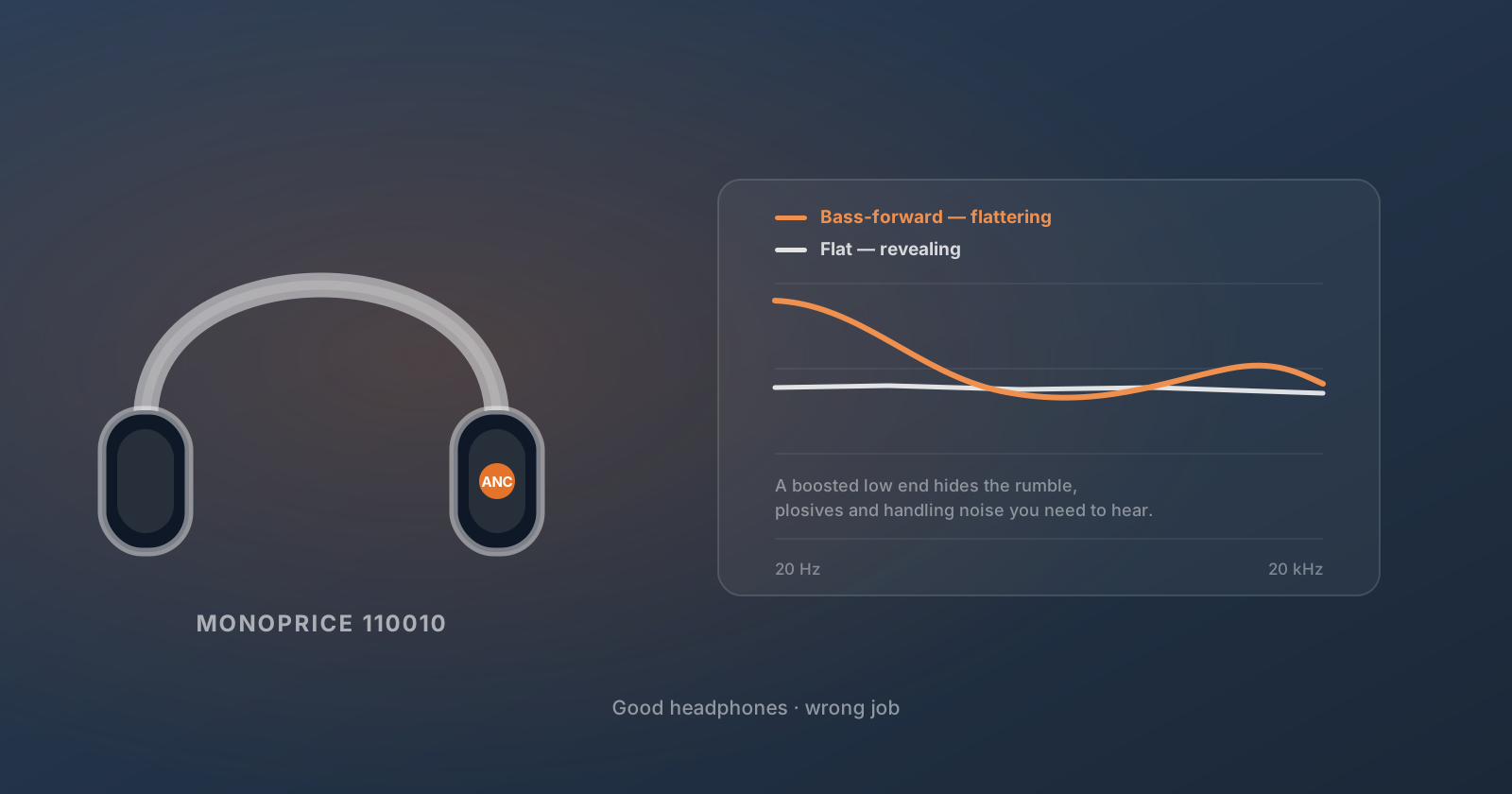
- The warm, bass-forward tuning hides plosives, rumble and handling noise — the exact problems an editor needs to catch.
- Closed-back is the right form factor for recording; it's the ANC and the tuning that rule these out.
- Genuinely useful as guest headphones or a travel pair — just not as your monitoring set.
The short verdict
Rated 4 out of 5 as budget listening headphones. That rating is for what they're sold as — casual listening and travel — not for studio work, which they aren't designed for and which I wouldn't score them on.
That score sits deliberately at very good with a known flaw rather than near-perfect. The independent reviews back both halves of that: broad agreement that the sound punches well above roughly £80, and equally broad agreement that comfort over long sessions and noise cancelling against premium Bose and Sony models are where they give ground. Sources are listed at the end.
Good for: commuting, travel, casual listening, working in a noisy room, or as a spare pair to hand a guest.
Not for: monitoring your own voice while recording, editing, mixing, or any decision where you need to hear exactly what's on the recording.
Buy them if you want capable, comfortable noise cancelling headphones without spending Bose or Sony money. Don't buy them if they're meant to be the headphones you produce a show on — that's a different tool for a different job, and the gap isn't about price.
What you get for the money
At roughly £80 (prices move, so check before you buy) the build is better than the number suggests. They're closed-back, over-ear, and light at about 0.51 lbs — enough that you forget you're wearing them for the first hour or two. The drivers are large (listings vary between 40mm and 50mm, so I won't pretend to a single figure), which is a fair part of why the low end has the weight it does.
The noise cancelling runs off a single AAA battery rather than a rechargeable cell. That's a genuine trade-off rather than a flaw: no charging cable to lose and no degraded battery in three years, but you do need a spare AAA in the bag. It also means the headphones keep working passively when the battery dies, which is more than some rechargeable pairs manage.
They ship with a protective case, which at this price is not a given and makes them a sensible travel pair.
The honest comfort caveat: they're comfortable for shorter sessions, and this is where the reviews converge most sharply. Sound & Vision's reviewer found the earpiece pressing on his ear after about thirty minutes and couldn't manage a full hour in them, rating comfort a clear step below Bose. That matches my own experience — for a flight or a commute they're fine, but over the kind of four-hour edit that is a normal working day the clamp starts to tell.
That alone is a practical strike against them as production headphones, before we get anywhere near the sound.
How they actually sound
Warm. That's the one-word summary, and for most people buying headphones it's a compliment.
The low end is generous and full, the sort of tuning that makes music feel immediately satisfying. The highs are more detailed than I expected at this price — there's real clarity up there rather than the rolled-off mush budget headphones often serve.
The noise cancelling is effective specifically on low-frequency ambient noise: engine drone, air conditioning, the general hum of a train carriage. That's where ANC works best in general, and this pair does it competently. It is not at the standard of premium Bose or Sony models — it doesn't erase a room the way a £300 pair will — but it's a meaningful reduction and it's the feature you're paying for.
As a listening experience for the money, I have no complaints. The problem isn't quality. It's that everything I just described as a strength becomes a liability the moment you try to work in them.
Why I wouldn't use them to record or edit a podcast
This is the part no generic review will tell you, and it's the whole reason I rebuilt this post.
1. ANC actively processes the signal. Noise cancelling works by generating an inverse waveform to cancel incoming sound. That means what reaches your ear is not the recording — it's the recording plus a layer of real-time processing. When your entire job is judging what's actually on the file, listening through a filter that alters it is self-defeating.
2. ANC can introduce latency. That processing takes time. Small amounts, but when you're monitoring your own voice while recording, even a few milliseconds of delay is genuinely disorienting — it's the same effect that makes people stumble over their words on a bad phone line. Monitoring should be as close to instantaneous as possible.
3. A bass-forward tuning hides the exact problems you're hired to catch. This is the serious one. A boosted low end masks low-frequency rumble, desk and handling noise, and the thump of plosives. If those problems are being flattered in your headphones, you'll under-correct them — and they'll be plainly audible to a listener on a different pair. Sibilance is the same story in reverse: a tuning that's pleasant rather than neutral makes it harder to judge how harsh those "s" sounds really are.
4. You want revealing, not flattering. Studio headphones aim for a flat response precisely because it's unflattering. Flat headphones make bad audio sound bad, which is exactly what you need — they surface problems instead of smoothing them over. Editing on flattering headphones means you're mixing to compensate for a colouration nobody else has, and the show ends up sounding worse everywhere else.
One thing they get right: closed-back is the correct form factor for recording, because the sound doesn't leak out of the cups and back into the microphone. So the shape is fine. It's the processing and the tuning that rule them out. Our audio quality guide goes deeper on what you should be listening for at each stage.
When they ARE a good buy for podcasters
I don't want this to read as a dismissal, because there are genuinely sensible reasons for a podcaster to own a pair.
As guest headphones. A guest doesn't need a flat response — they need to hear you clearly and comfortably, without the audio leaking into their mic. Closed-back does that, and comfort matters more than accuracy for someone who just needs to follow a conversation. Being able to hand over a decent, unfussy pair is useful.
For a co-host who isn't editing. Same logic. If they're talking rather than making production decisions, these are more than adequate.
For travel and listening. Obviously. This is what they're built for, and they're good at it.
As a second reference pair. There's a real argument for checking a finished mix on consumer headphones, because that's what your audience is actually using. Just don't make the decisions on them — make the decisions on flat headphones and use these to sanity-check how it'll land on the average listener's kit.
That last use is genuinely valuable and often overlooked.
What to buy instead for podcasting
For production work you want closed-back, wired, no active noise cancelling, and as flat a response as your budget allows. Those four criteria matter far more than any brand name.
| Headphones | Roughly | Type | Best for |
|---|---|---|---|
| Audio-Technica ATH-M30x | ~£50–£70 | Closed-back, over-ear | The best first pair; recording and editing on a budget |
| Sony MDR-7506 | ~£80–£110 | Closed-back, over-ear, foldable | The buy-once workhorse; the broadcast standard |
| Sennheiser HD 25 | ~£120–£150 | Closed-back, on-ear | Field recording, in-person interviews, single-ear monitoring |
| Monoprice 110010 ← this one | ~£80 | Closed-back, over-ear, ANC | Listening and travel — not monitoring or editing |
Prices vary a lot by retailer and over time, so treat those as ranges rather than quotes.
If you want the short version: buy the ATH-M30x if you're starting out and the MDR-7506 if you're committed. If you record in the field or interview people in person, the HD 25 solves that differently — its capsule rotates so you can keep one ear on the recording and one on the room, which no over-ear pair here can do. The full roundup is in the best headphones for podcasting guide.
The practical advice: spend less than you think on the headphones and more on the microphone and the room. A flat £40 pair will serve you better than an £80 consumer pair, and the difference between a £40 and a £200 monitoring pair matters far less than whether you're recording in a soft, quiet space. If you're still assembling a setup, step 3 of our podcast launch roadmap covers the minimum gear that actually matters.
A note on where gear actually matters
Having spent this long on headphones, it's worth saying plainly: gear is the smallest variable in how a podcast sounds. The room matters more than the microphone, the microphone matters more than the interface, and all of them together matter less than whether someone competent is doing the edit.
The reason I care about headphones at all is that they're the instrument you make decisions with. Get them wrong and every other decision downstream inherits the error. That's the entire argument of this article — not that the Monoprice are bad, but that judging audio through a processed, bass-boosted signal quietly corrupts everything you do next.
And if the edit itself is the bottleneck rather than the kit, that's worth pricing honestly — our editing cost calculator works out what those hours are costing you each year.
The verdict
The Monoprice 110010 are good budget headphones. At around £80 they're comfortable for a couple of hours, the noise cancelling does what it claims on low-frequency noise, they come with a case, and they sound warm and pleasant. If you want capable ANC headphones without premium money, they're a fair buy.
They're just not podcast production headphones, and no amount of value changes that — because the things that make them enjoyable to listen to are the same things that make them unreliable to work on.
Buy them for the commute. Buy a flat, closed-back, un-processed pair for the edit. They're different tools, and it isn't really a question of price.
If the editing is the part you'd rather hand over entirely, that's what we do — or get a quote.
Common questions
Are the Monoprice 110010 good for podcasting?
Not for recording or editing. They're active noise cancelling headphones with a warm, bass-forward tuning — the ANC processes the signal so you aren't hearing exactly what was recorded, and the boosted low end hides plosives, rumble and handling noise you need to catch. They're perfectly good as guest headphones or a travel pair.
Are noise cancelling headphones good for recording?
No. Active noise cancelling generates an inverse waveform to cancel outside sound, which means you're listening to a processed version of your audio rather than the audio itself. It can also add small amounts of latency, which is disorienting when monitoring your own voice. For recording and editing you want passive closed-back headphones with no active processing.
What headphones should I use to edit a podcast?
Closed-back, wired, with no active noise cancelling and as flat a frequency response as your budget allows. Flat is the point — it makes problems audible instead of flattering them. Closed-back stops sound leaking into the microphone when you're recording. Spend less here and more on your microphone and your room.
Are the Monoprice 110010 worth it?
For listening, travel and commuting at around £80, yes — comfortable for shorter sessions, effective noise cancelling on low-frequency noise like engine drone, detailed highs, and a protective case included. For podcast production work, no, regardless of the price.
Do you need closed-back headphones for podcasting?
For recording, yes. Closed-back headphones keep the sound inside the cups so it doesn't leak out and get picked up by your microphone, which would leave you with bleed you can't remove later. The Monoprice 110010 are closed-back, so the form factor is right — it's the active noise cancelling and the bass-forward tuning that make them the wrong choice.
References & further reading

Author
James Pearce
Founder & Podcast Producer
I'm James — I founded Selected Frequencies and produce the shows we work on. Eight years in audio, from BBC Radio 1 mixes to thousands of podcast episodes, and I still edit every show myself.